Sheeting Line Troubleshooting for High-Speed Noodle Factories
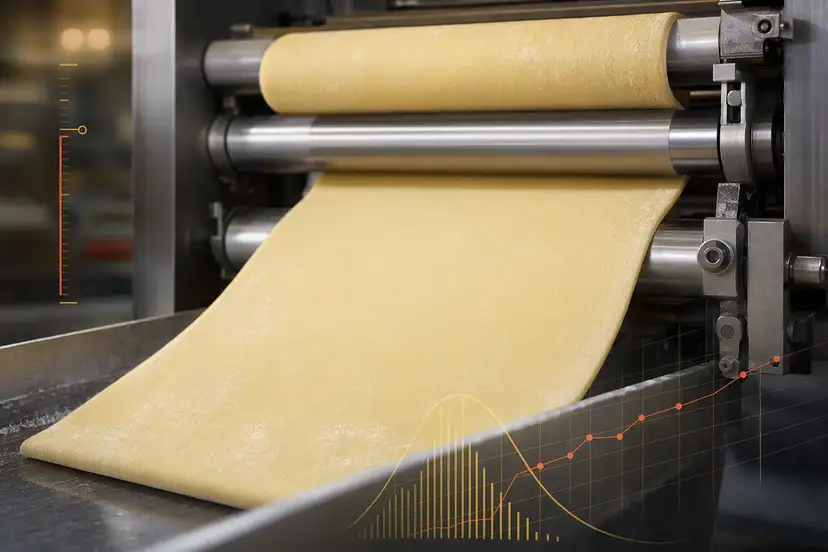
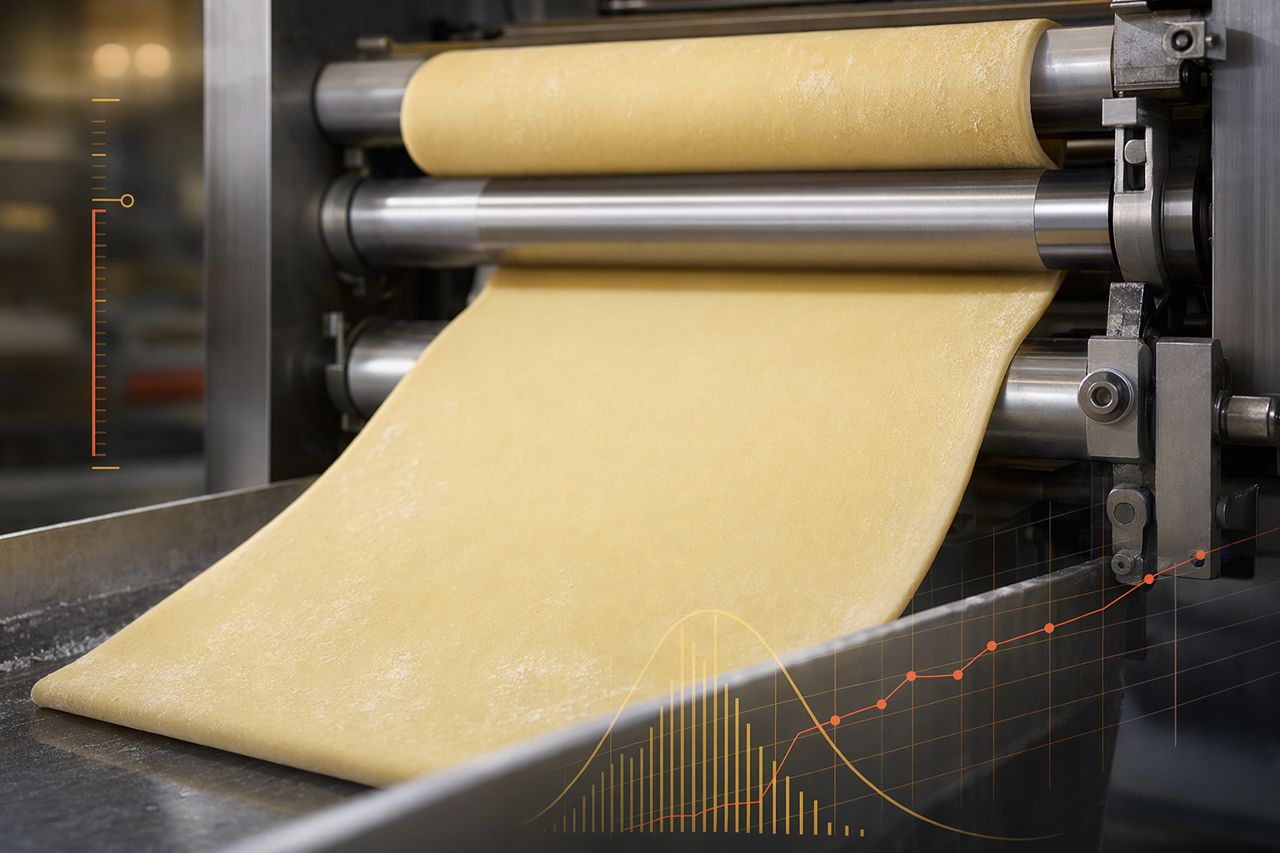
On a high-speed instant noodle line, the sheeter is where formulation decisions become mechanical reality. Flour quality, hydration, mixing energy, resting time, roller pressure, cutting geometry, steaming, and drying or frying all meet at the dough sheet.
When that window is narrow, production teams see the same symptoms: edge cracking, wrinkling, sheet tearing, roller buildup, poor strand separation, uneven wave formation, block-weight variation, and inconsistent bite after cooking.
StrandPilot works as an enzyme supplier for noodle manufacturing to help R&D and production teams connect dough behavior with factory outcomes. The objective is not simply to make a dough softer or stronger. The objective is to hit a defined texture target while keeping the line stable at commercial speed.
Request a quote if you want enzyme guidance for a sheeting-line issue, flour change, or scale-up brief.
Why sheeting problems often start before the sheeter
A sheeting line can expose problems that were created earlier in the process. Before changing roller gaps or slowing the line, check whether the dough entering the sheeter is inside a manageable rheology window.
Common upstream causes include:
- Flour variability: protein quality, starch damage, ash level, and seasonal wheat changes can shift absorption and elasticity.
- Water distribution: uneven hydration can create hard particles, weak zones, and inconsistent surface gloss.
- Mixing profile: under-mixing can leave poor dough continuity; over-mixing can tighten the dough and increase stress at the rollers.
- Resting time: too little rest can create tight, spring-back behavior; too much rest can weaken handling and reduce strand definition.
- Temperature drift: dough temperature affects hydration speed, relaxation, and mechanical response.
For noodle factories, the practical question is simple: does the dough sheet smoothly, cut cleanly, and keep its intended bite after cooking?
Symptom 1: edge cracking and sheet tearing
What operators see
- Cracks along the sheet edges
- Tearing at transfer points
- Holes or thin spots after compression
- Frequent stoppages to rethread or trim the sheet
Likely process drivers
Edge cracking is usually a sign that the dough is too tight, under-hydrated, insufficiently rested, or mismatched to the compression profile. If the line is running a flour with stronger gluten behavior than expected, the dough may resist extension and fail at the sheet edges.
Enzyme-led approach
An enzyme system can help tune dough extensibility and sheet continuity when mechanical changes alone are not enough. The goal is a sheet that tolerates compression without becoming slack or sticky.
For R&D teams, this means testing enzyme options against measurable factory outcomes:
- smoother sheet surface
- lower edge cracking tendency
- cleaner transfer between rollers
- stable dough behavior across normal flour variation
- maintained final bite and noodle resilience
Symptom 2: excessive spring-back after rolling
What operators see
- Sheet width changes after compression
- Difficulty holding target thickness
- Uneven strand geometry after cutting
- Wave pattern inconsistency after steaming or frying
Likely process drivers
Spring-back often reflects a dough matrix that is too elastic for the line speed and roller sequence. Production may compensate by changing roller gaps, but this can create secondary issues such as over-compression, surface roughness, or localized tearing.
Enzyme-led approach
For instant noodle manufacturing, enzyme selection should be matched to the desired balance of elasticity and extensibility. The aim is not to remove strength. It is to make strength more usable on the line.
StrandPilot supports formulation teams by helping define a practical dosage window around:
- flour base and protein behavior
- target sheet thickness
- roller reduction schedule
- desired strand shape
- steaming profile
- finished noodle firmness
Symptom 3: roller sticking and surface buildup
What operators see
- Dough film on rollers
- Surface smearing
- Irregular sheet gloss
- Increased cleaning interruptions
- Strand clumping after cutting
Likely process drivers
Sticking can come from excessive surface moisture, damaged starch behavior, dough temperature, or a formulation that has moved outside its handling window. It can also occur when an enzyme approach is too aggressive for the flour and process conditions.
Enzyme-led approach
A factory-ready enzyme strategy should improve handling without creating tackiness. For noodle lines, that means evaluating enzyme impact across the whole process, not only at the mixer.
Useful checkpoints include:
- dough feel after mixing and rest
- sheet surface after first compression
- roller release at operating speed
- cut-strand separation
- block formation consistency
- cooked-noodle surface and bite
Symptom 4: poor strand definition after cutting
What operators see
- Ragged strand edges
- Strand clumping
- Variable strand thickness
- Weak wave formation
- Inconsistent portioning into noodle blocks
Likely process drivers
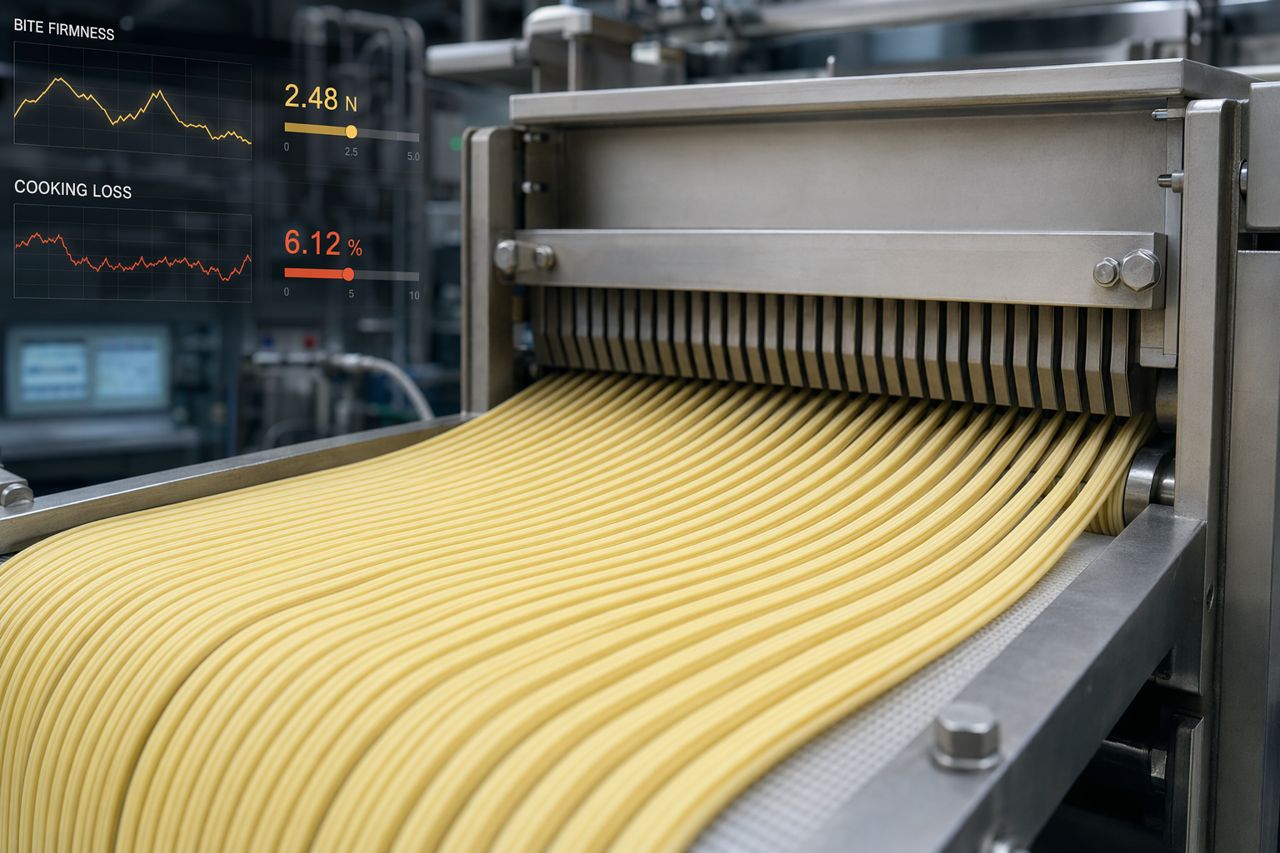
Poor strand definition is often caused by a dough sheet that is either too weak to cut cleanly or too tight to pass evenly through the cutter. The issue may also be linked to sheet thickness variation created earlier in the roller train.
Enzyme-led approach
For noodle factories, strand definition depends on a stable dough sheet and a controlled cut. Enzyme systems can be used to support cut quality when selected around the full texture target.
The target is a strand that:
- separates cleanly at the cutter
- holds shape through steaming
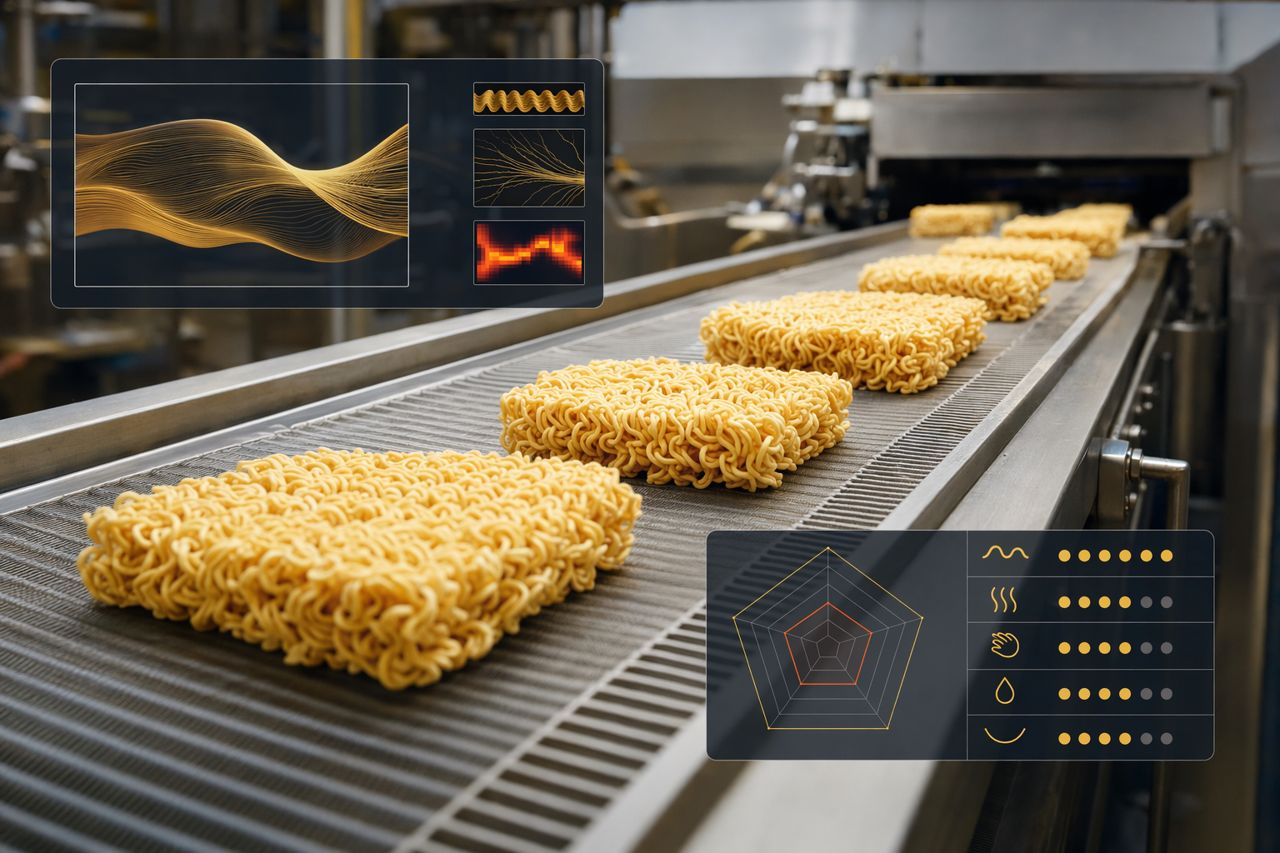
- forms a consistent block
- hydrates predictably for the consumer
- delivers the intended firmness and chew
Symptom 5: finished noodles fail the cooking target
What operators see
- Soft bite after rehydration
- Hard center or slow hydration
- High cooking loss
- Cloudy broth or cup water
- Batch-to-batch sensory drift
Likely process drivers
A sheeting issue can carry through to the final eating experience. Uneven sheet density, poor strand structure, and unstable dough handling can affect hydration curve, bite firmness, and cooking loss.
Enzyme-led approach
The right enzyme decision should be judged by both production stability and sensory performance. A smoother sheeting line is valuable only if the finished noodle still meets the brand standard.
StrandPilot helps teams evaluate enzyme options against factory-relevant endpoints:
- bite firmness after target preparation time
- hydration consistency across the block
- surface smoothness
- broth clarity
- strand resilience during eating
- consistency after scale-up
A practical troubleshooting sequence for R&D and production teams
Use this sequence when a high-speed sheeting line begins to drift.
1. Lock the product target
Define the required noodle outcome before changing the process:
- firm, elastic, or soft bite
- fast or gradual hydration
- target wave and block shape
- broth clarity expectation
- acceptable strand breakage
2. Map the current line behavior
Capture what is happening at each stage:
- dough after mixing
- dough after resting
- first sheet formation
- roller-to-roller transfer
- final sheet thickness
- cutting performance
- steaming behavior
- drying or frying response
- final cooked texture
3. Separate mechanical issues from formulation issues
Mechanical corrections may solve alignment, gap, or pressure problems. Formulation work is needed when the dough itself is too tight, too weak, too sticky, or inconsistent across flour lots.
4. Test enzyme options in the correct process window
Do not evaluate enzymes only by bench feel. Test them against the conditions that matter in the factory:
- line speed
- roller reduction pattern
- resting time
- moisture target
- steaming profile
- final cooking protocol
5. Confirm scale-up behavior
A promising bench result must survive production realities. StrandPilot supports scale-up thinking around ingredient addition, mixing sequence, process tolerance, and quality checks.
Where StrandPilot fits
StrandPilot is built for noodle manufacturers that need practical enzyme support, not generic ingredient claims. We help teams translate formulation variables into production outcomes.
Our application focus includes:
- dough extensibility and sheet smoothness
- line stability at commercial speed
- strand definition and cutting behavior
- steamed noodle structure
- dried or fried block consistency
- cooking performance and sensory repeatability
- support during flour changes and product scale-up
If your sheeting line is limiting output, narrowing your flour options, or creating finished-noodle inconsistency, StrandPilot can help define an enzyme approach that fits your equipment and texture target.
Request formulation support
Share your flour base, noodle type, process outline, and the sheeting symptom you are seeing. StrandPilot will review the brief and recommend a practical enzyme direction for your noodle line.
Request a quote to start a technical conversation with our team.