Reducing Line Waste in Noodle Block Production
In instant noodle manufacturing, waste rarely has a single cause. A broken block at packaging may have started as a hydration gap in mixing, a sheet weakness at reduction, an uneven steam response, or a drying profile that made corners brittle. When these variables drift together, the line sees the symptoms: cracks, loose strands, chipped blocks, excessive fines, rework, and inconsistent bite after cooking.
StrandPilot works as an enzyme supplier for noodle manufacturing with one practical goal: help R&D and production teams convert formulation variables into more predictable noodle-block outcomes.
Enzymes are not a shortcut around process control. Used well, they are a precision tool for dough behavior, sheet strength, strand handling, and finished-block integrity.
Where noodle-block waste typically forms
Line waste often concentrates at several pressure points:
- Mixing and hydration: uneven water distribution, slow flour hydration, inconsistent dough crumb condition.
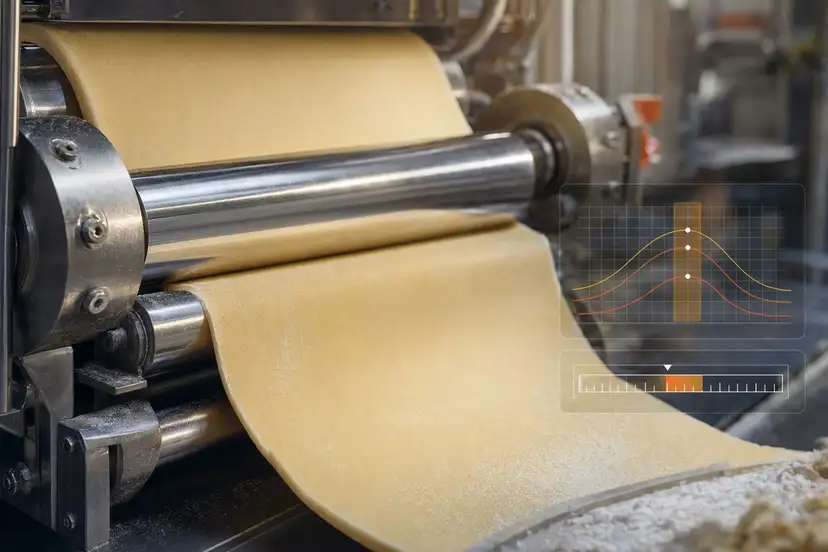
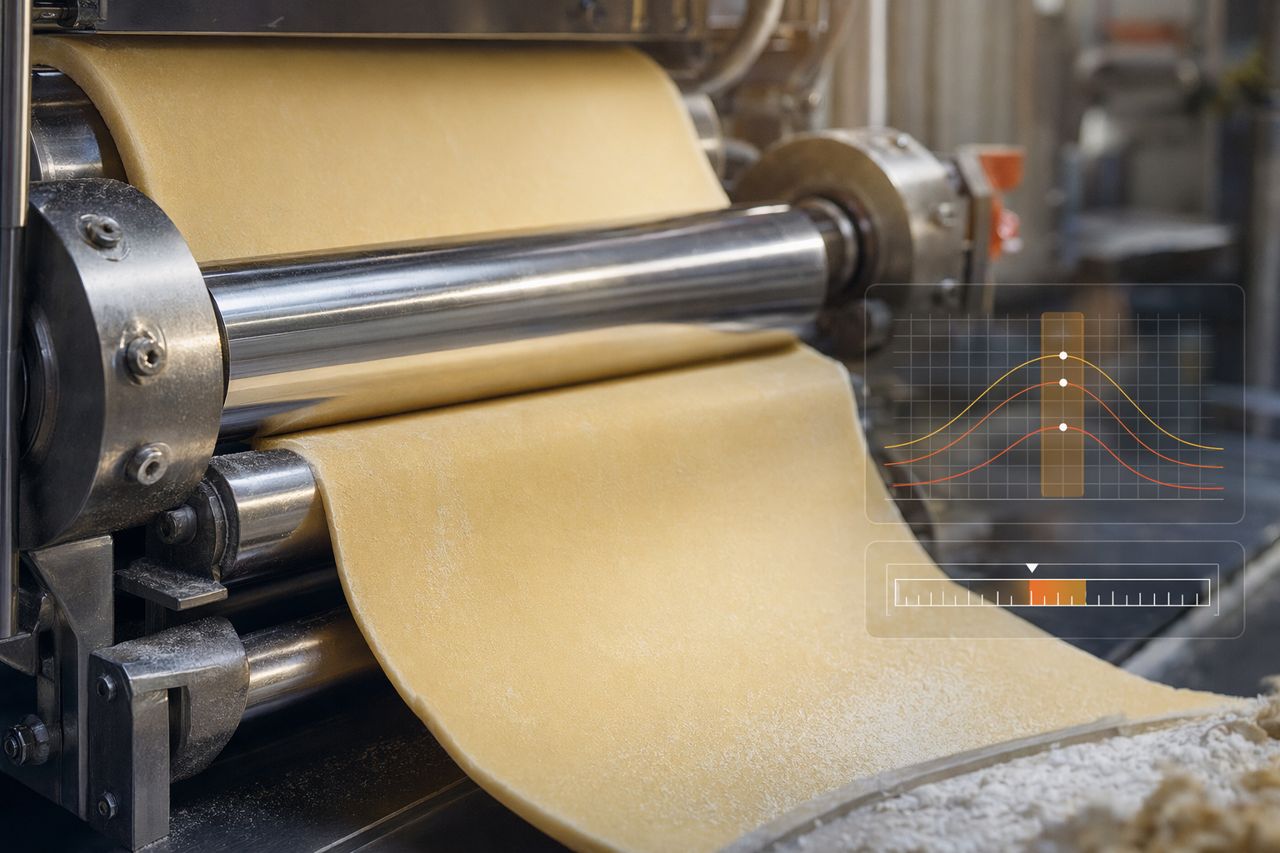
- Sheeting and reduction: tearing, rough edges, weak laminations, excessive dusting, unstable ribbon formation.
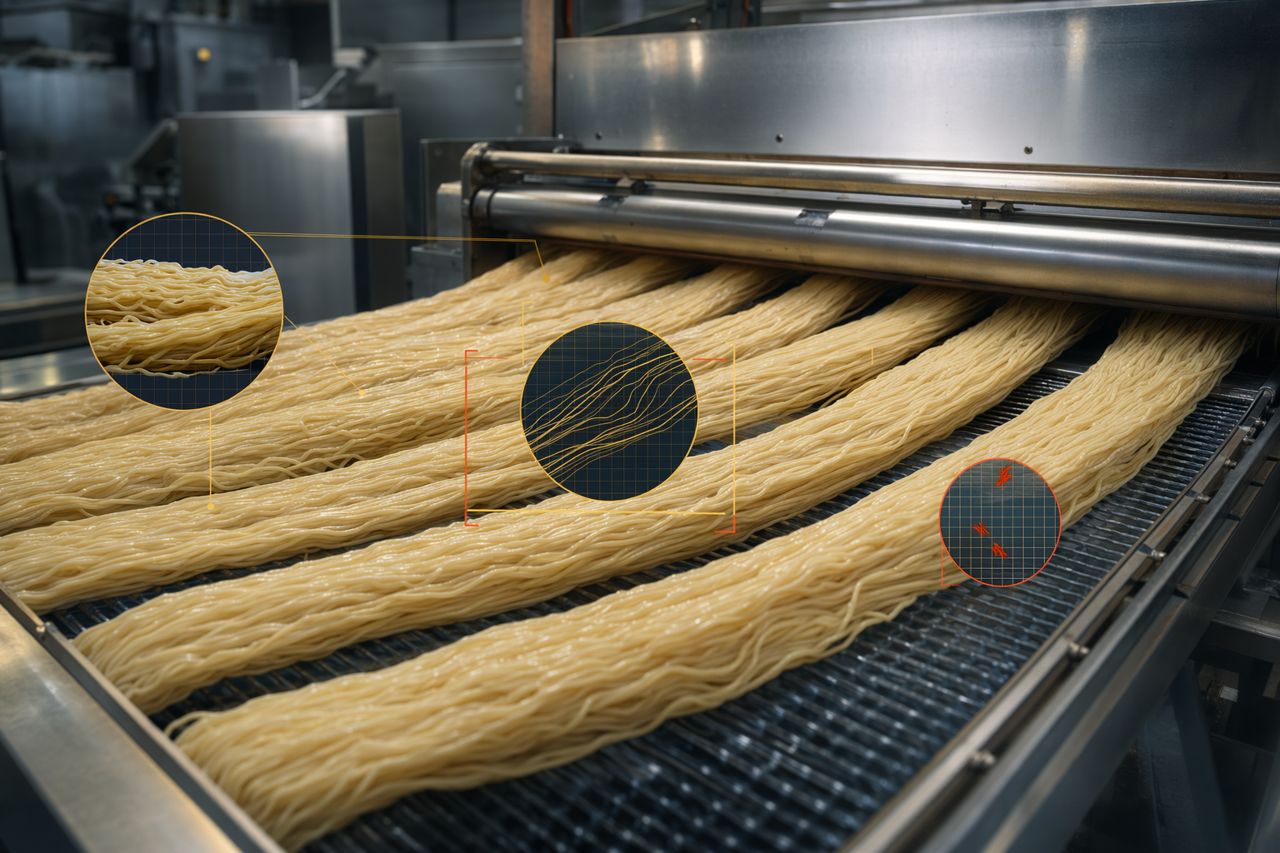
- Slitting and waving: strand breakage, poor separation, inconsistent wave structure, weak strand cohesion.
- Steaming: uneven gelatinization response, strand surface stickiness, or fragile structure before drying or frying.
- Drying or frying: surface checking, brittle corners, excessive shrinkage, and fragile block geometry.
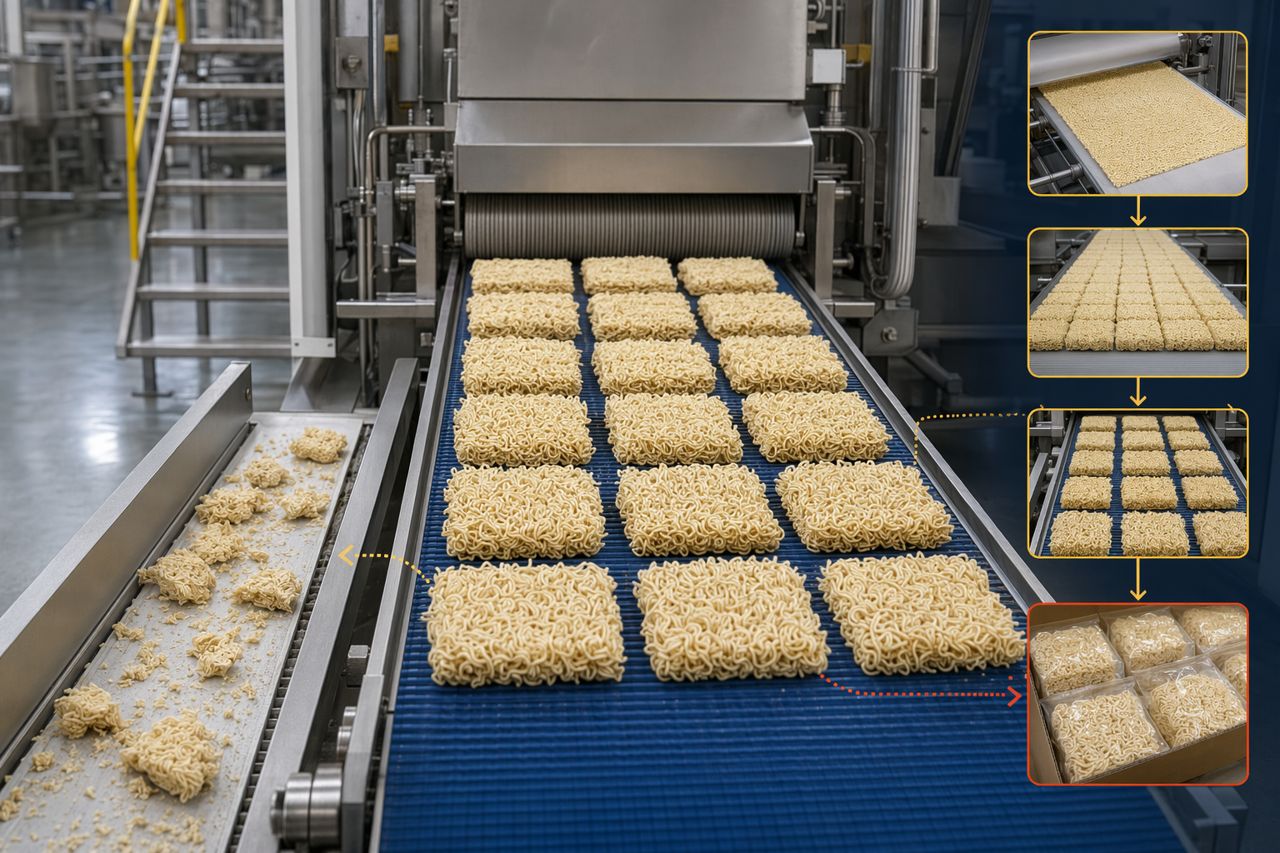
- Cooling and packing: chipped edges, cracked blocks, loose strands, and carton-level rejects.
For many factories, the challenge is not only reducing visible rejects. It is reducing the hidden cost of running slower, widening process tolerances, over-correcting water addition, or accepting sensory variation to keep the line moving.
How enzyme systems can support line stability
A noodle block needs enough elasticity to survive forming and enough structure to hold shape through heat, moisture migration, and packaging. The wrong dough profile can be too tight, too slack, too sticky, too brittle, or too variable across flour lots.
StrandPilot enzyme systems are selected around the manufacturing target, not a generic additive list. Depending on flour quality, formulation, and process design, the technical objective may include:
- improving dough machinability without losing bite definition;
- supporting smoother sheet formation through reduction rolls;
- reducing edge cracking and strand breakage;
- improving cohesion before steam and thermal setting;
- managing finished-block brittleness after drying or frying;
- improving consistency when flour quality shifts;
- helping R&D teams define a workable dosage window for scale-up.
This is where enzyme choice matters. A system that improves handling in one formulation may soften bite too much in another. A system that strengthens process tolerance in fried noodles may need adjustment for air-dried formats. StrandPilot helps define that window before the full line carries the risk.
Practical levers for reducing waste
1. Start with the waste map
Before changing the formulation, identify where reject material is generated and how it travels. A cracked block at packing may come from a weak sheet, poor wave formation, over-drying at the edge, or excessive mechanical stress after cooling.
Useful waste-map questions include:
- Are breaks concentrated at block corners, edges, or across the full block?
- Do loose strands increase after a flour lot change?
- Does breakage increase at higher line speed?
- Are the defects present before drying or only after cooling?
- Is the bite target being protected, or is texture being sacrificed to reduce rejects?
A clear waste map helps determine whether the enzyme target should focus on dough extensibility, strand cohesion, moisture response, or finished-block resilience.
2. Tune dough rheology without chasing softness
Many noodle lines try to solve breakage by making dough easier to sheet. That can help temporarily, but if the dough becomes too soft or sticky, the line may trade cracks for poor cutting, strand clumping, or weak bite.
StrandPilot focuses on controlled rheology. The intended result is a dough sheet that runs cleaner through reduction, maintains strand definition, and supports the desired eating texture after cooking.
3. Protect the steam-to-dry transition
The transition from formed strands to thermally set block is a common waste point. If strand structure is inconsistent, the block may look acceptable before drying but become fragile once moisture is removed. Enzyme selection can help improve structural consistency across this transition, especially when combined with practical adjustments to hydration, resting, sheeting, and heat profile.
4. Build a dosage window for plant conditions
A formulation that works on a bench sheet may behave differently under production speed, factory temperature, flour variation, and real steaming or frying conditions. StrandPilot supports trials around a defined dosage window so teams can evaluate:
- sheet appearance and roll behavior;
- strand separation and wave consistency;
- block formation and dimensional stability;
- breakage after cooling and packing;
- cooking loss trends;
- bite firmness and sensory consistency.
The goal is not to create a fragile laboratory result. The goal is to find a production-ready operating range.
What better waste control can deliver
For noodle manufacturers, reduced line waste is not just a yield metric. It can support broader factory performance:
- fewer broken blocks and less rework;
- more stable sheeting and slitting behavior;
- cleaner transfer through steam and drying or frying zones;
- reduced packaging rejects;
- better consistency across flour lots;
- stronger alignment between R&D texture targets and production reality;
- faster troubleshooting when quality drift appears.
When enzyme systems are built around the actual process, they can help factories run closer to specification with fewer emergency corrections.
StrandPilot support for noodle factories
StrandPilot brings an R&D-led approach to enzyme selection for noodle manufacturing. We review the noodle format, flour base, process flow, target texture, current waste pattern, and scale-up constraints before recommending a technical route.
Support can include:
- formulation review for instant noodle blocks;
- enzyme system selection for dough handling and block integrity;
- bench and pilot trial planning;
- production trial guidance;
- sensory and cooking-performance alignment;
- troubleshooting when flour or line conditions change.
We speak in terms that matter on the factory floor: sheet stability, strand strength, bite, hydration, cooking performance, reject rate, and repeatability.
Request a quote
If cracks, loose strands, brittle corners, or packaging rejects are limiting your noodle-block line, StrandPilot can help you assess the enzyme options and plan a practical trial.
Request a quote through the on-site form and tell us your noodle format, process type, target texture, and current waste point.