The Noodle Texture Defect Atlas: From Dough Crumb to Finished Cup
Instant noodle texture is built long before the cup test. It begins in the mixer, shows itself on the sheeter, shifts through steam and drying or frying, then becomes visible to the consumer as bite, elasticity, surface smoothness, cooking loss, and broth clarity.
For R&D, QA, and production teams, the hard part is not naming a defect. It is connecting a sensory complaint back to the controllable variables that caused it.
StrandPilot is an enzyme supplier for noodle manufacturing focused on that connection: helping noodle factories convert flour variation, dough behavior, and process windows into more predictable finished-cup performance.
Why noodle texture defects are rarely single-cause
A broken strand, muddy broth, or rubbery bite can come from formulation, flour age, water absorption, mixing energy, resting time, roller pressure, steaming intensity, drying profile, frying pickup, or packaging moisture migration. Enzymes add another controllable layer: they can support dough handling, eating quality, and line consistency when selected around the real process target.
The right question is not simply, “Which enzyme improves noodles?”
The better question is:
Which texture defect are we trying to reduce, at which process stage, under which flour and line conditions?
This atlas maps common noodle defects from dough crumb to finished cup and shows where enzyme strategy can help stabilize outcomes.
Embedded explainer video: texture defects across the noodle line
[Faceless 1-minute explainer video embed: macro dough crumb, sheeting, strand cutting, steaming, drying/frying, cup rehydration, and QA texture overlays]
Use this short visual guide as a fast alignment tool for R&D, production, and procurement teams before a texture improvement project.
Stage 1: Dough crumb defects
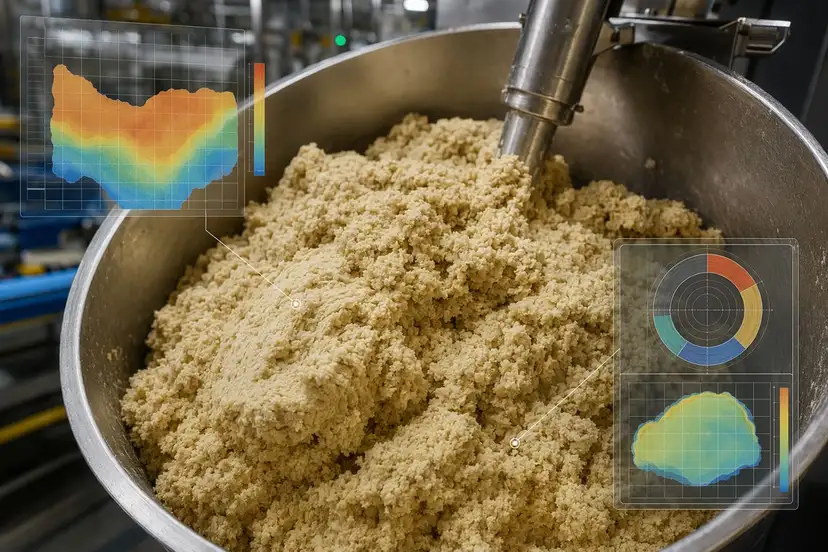
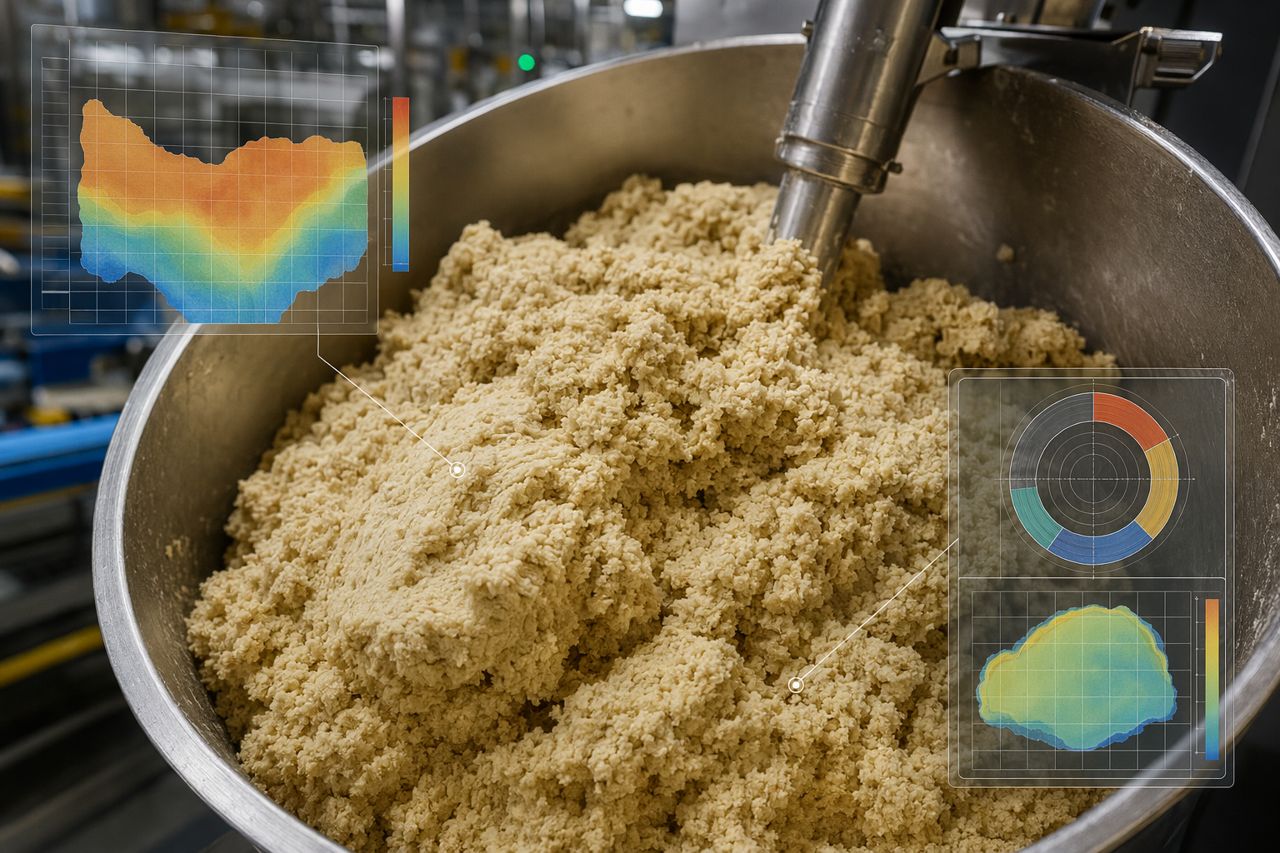
Defect: uneven crumb size
What it looks like
The mixer produces a mix of dry flour pockets, large wet lumps, and fine crumb. Sheet feed becomes unstable, and the first pass through the rollers shows tearing or uneven thickness.
Likely impact downstream
- Variable hydration across the sheet
- Weak or patchy gluten development
- More edge cracking during sheeting
- Inconsistent bite after cooking
Common process links
- Water addition not distributed evenly
- Short or overly aggressive mixing
- Flour protein or starch damage variation
- Rest time too short for hydration equalization
Where enzymes can support
A targeted enzyme approach can help the dough system move toward more even water distribution, improved extensibility, and more stable sheet formation. The goal is not to “soften everything.” It is to create a dough crumb that enters the sheeter predictably.
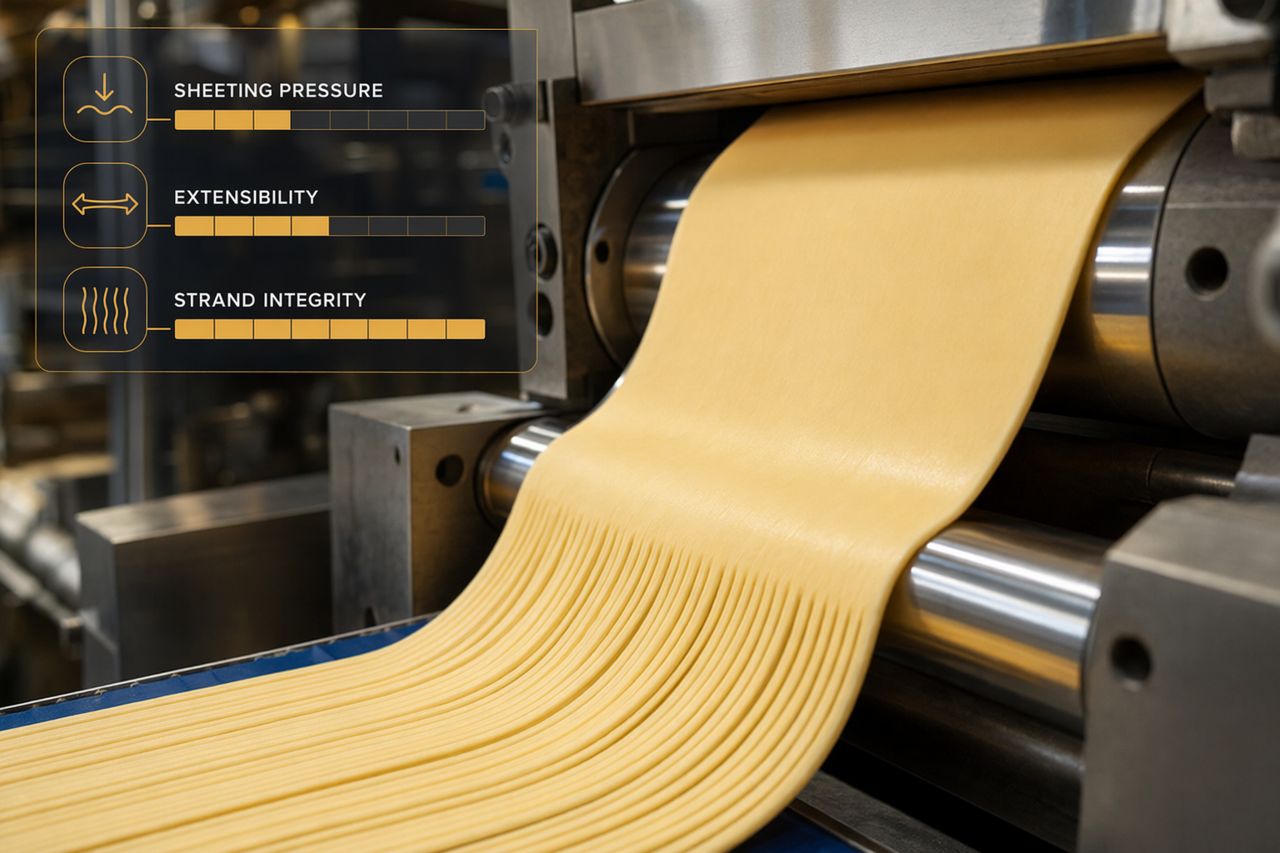
Defect: dough feels tight and resists sheeting
What it looks like
The sheet rebounds after rolling, edges split, and operators increase roller pressure to force gauge reduction.
Likely impact downstream
- High mechanical stress in the sheet
- Increased strand breakage after cutting
- Tough bite or uneven chew
- Line slowdowns from adjustment cycles
Enzyme strategy lens
For tight dough systems, enzyme selection should focus on controlled extensibility and process tolerance. Overcorrection can create sticky dough, so StrandPilot typically evaluates this defect through pilot sheeting behavior, strand integrity, and final rehydration texture together.
Stage 2: Sheeting and cutting defects
Defect: sheet tearing or edge cracking
What it looks like
Sheets develop cracks along the edges or split between roller passes. Cut strands show rough edges rather than clean geometry.
Likely impact downstream
- Fragile strands before steaming
- Broken noodle blocks after drying or frying
- Poor visual quality in the cup
- Higher fines and rework pressure
Root-cause cluster
- Dough too dry or insufficiently rested
- Flour batch less tolerant to compression
- Roller gap reduction too aggressive
- Dough matrix lacks elasticity or cohesion
Where enzymes can support
Enzyme systems can be selected to improve sheet tolerance during compression and reduce cracking under standard production speeds. For manufacturers scaling a new noodle format, this is often where lab success first fails on the line.
Defect: strands stretch, stick, or deform after cutting
What it looks like
Cut strands lose definition, clump lightly, or pull unevenly as they enter the next stage.
Likely impact downstream
- Uneven steaming
- Irregular wave structure
- Variable drying or frying
- Consumer-visible texture inconsistency
Enzyme strategy lens
This defect usually requires balance. Improving extensibility without losing strand definition depends on the flour system, water level, salt or alkaline profile, and line speed. Enzyme choice should be validated against strand separation and cooking performance, not only dough feel.
Stage 3: Steaming defects
Defect: under-gelatinized core
What it looks like
Noodles look acceptable but cook unevenly. The bite can feel chalky, dense, or resistant at the center.
Likely impact downstream
- Slow cup rehydration
- Hard core after target steep time
- Inconsistent texture between block center and edge
- Higher consumer complaint risk
Common process links
- Steam penetration uneven across the belt
- Strand bed too dense
- Sheet or strand thickness variation
- Starch behavior not matched to process time
Where enzymes can support
Enzyme-led formulation can help tune starch and dough behavior so the noodle reaches a more consistent hydrated bite within the target cup preparation window. The process still matters: enzymes cannot compensate for a steam profile that does not reach the product evenly.
Defect: surface pastiness after steaming
What it looks like
The noodle surface becomes tacky, strands adhere, and the final block may show clumped zones.
Likely impact downstream
- Higher cooking loss
- Cloudier broth
- Sticky mouthfeel
- Poor strand separation during eating
Enzyme strategy lens
The objective is to protect surface smoothness while maintaining fast hydration. This requires careful selection and dosage windowing, because excessive breakdown can move the system toward softness, stickiness, and broth turbidity.
Stage 4: Drying or frying defects
Defect: fragile blocks and high breakage
What it looks like
Blocks crack during cooling, conveying, packing, or transport. The cup contains short pieces instead of resilient strands.
Likely impact downstream
- Poor shelf presentation
- Inconsistent rehydration
- More fines in secondary packaging
- Reduced perceived product quality
Root-cause cluster
- Weak strand structure before drying or frying
- Moisture gradient too steep
- Mechanical stress in block handling
- Dough sheet defects carried forward
Where enzymes can support
Enzyme selection should target strand resilience from the dough stage through thermal processing. In factory trials, StrandPilot evaluates block strength alongside cooked bite, because a noodle that survives packaging but eats poorly is not a successful formulation.
Defect: oily or heavy fried noodle texture
What it looks like
The noodle feels greasy, dense, or slow to hydrate. The block may show uneven color or variable expansion.
Likely impact downstream
- Heavy mouthfeel
- Slower cup readiness
- Reduced flavor release
- Less consistent sensory profile between batches
Enzyme strategy lens
For fried instant noodles, texture design must consider dough structure, moisture movement, and frying behavior together. Enzymes can support a more controlled matrix, but validation should include oil perception, rehydration time, and strand bite after the intended steep time.
Stage 5: Finished cup defects
Defect: soft bite and weak chew
What it looks like
The noodle hydrates quickly but loses structure. Strands feel limp, with low elastic recovery.
Likely causes
- Over-softened dough system
- Excessive surface breakdown
- Weak protein-starch network
- Process heat and moisture profile not matched to formulation
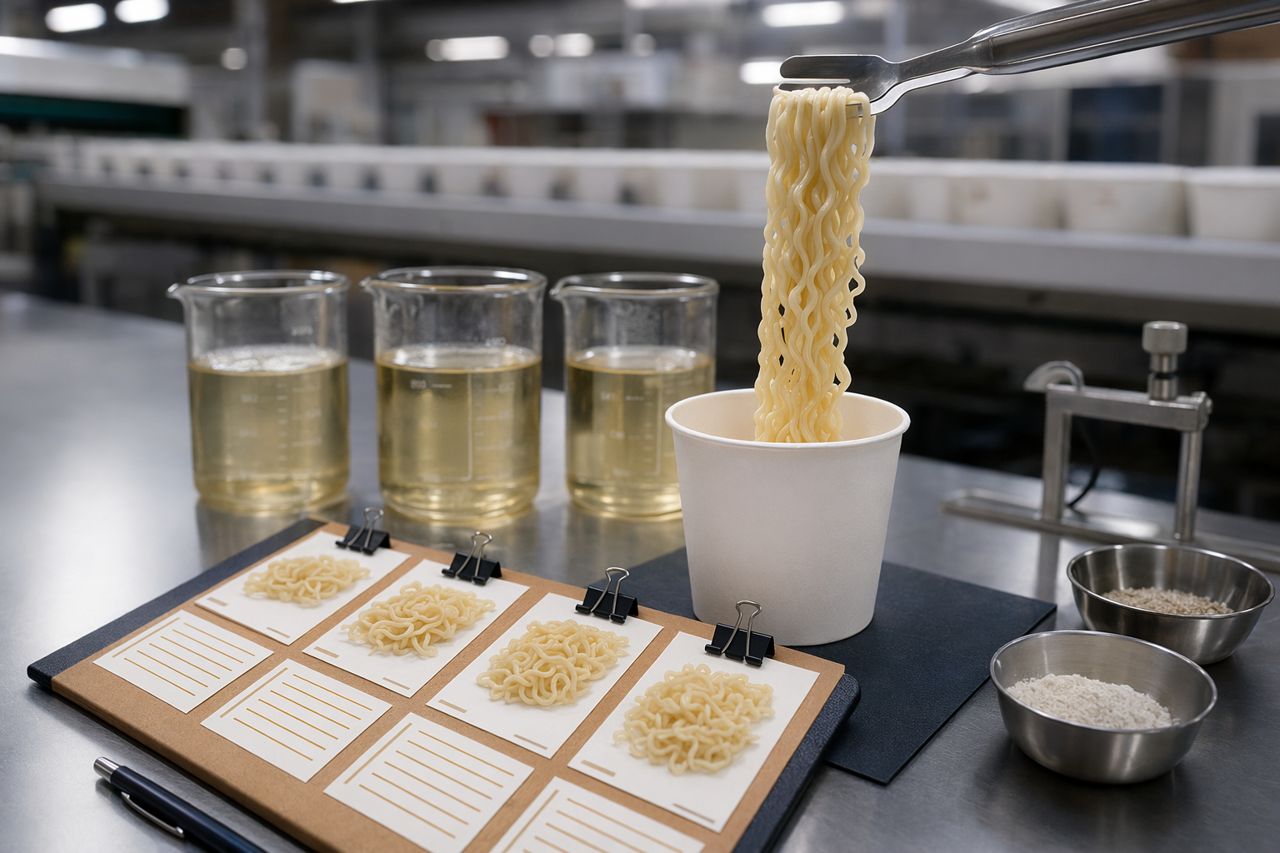
How to evaluate
- Bite firmness after target steep time
- Elastic recovery during sensory panel evaluation
- Strand integrity after stirring
- Texture retention over the eating window
Enzyme strategy lens
A soft-bite defect does not always mean enzymes should be reduced. It may mean the enzyme system needs a different balance, especially if the product must hydrate quickly while keeping chew.
Defect: rubbery or overly firm bite
What it looks like
The noodle resists chewing, hydrates slowly, or feels tough rather than elastic.
Likely causes
- Dough matrix too tight
- Insufficient hydration during processing or preparation
- Protein strength not balanced by extensibility
- Steam or drying profile creating a dense structure
Where enzymes can support
Controlled enzyme systems can help move the noodle toward elastic bite rather than hard resistance. StrandPilot frames this work around the target sensory language: firm, springy, smooth, chewy, or soft, depending on the product brief.
Defect: cloudy broth and high cooking loss
What it looks like
The broth becomes murky, starchy, or slick after preparation. The noodle surface may feel slimy.
Likely causes
- Excessive surface starch release
- Weak surface integrity after steaming
- Overly aggressive formulation adjustment
- Process variability in strand thickness or thermal treatment
Enzyme strategy lens
The target is fast hydration without losing surface control. Enzyme programs should be screened against broth clarity, surface feel, and strand separation, not only initial softness.
A practical defect-to-action table
| Texture defect |
Where it first appears |
What to check first |
Enzyme project focus |
| Uneven bite |
Dough crumb or steaming |
Water distribution, sheet thickness, steam penetration |
Hydration consistency and dough uniformity |
| Sheet tearing |
Sheeting |
Flour tolerance, rest time, roller reduction |
Controlled extensibility and sheet strength |
| Strand breakage |
Cutting, drying, packing |
Sheet cohesion, moisture gradient, handling stress |
Strand resilience through the process |
| Slow cup hydration |
Steaming or drying/frying |
Strand thickness, gelatinization, moisture profile |
Hydration curve and bite readiness |
| Cloudy broth |
Steaming or finished cup |
Surface starch release, over-softening |
Surface smoothness and cooking loss control |
| Rubbery bite |
Finished cup |
Dough tightness, hydration, thermal history |
Elastic chew without toughness |
| Soft, limp bite |
Finished cup |
Over-softening, weak matrix, steep time |
Firmness retention and texture window control |
How StrandPilot supports noodle R&D teams
StrandPilot works with noodle manufacturers that need practical enzyme support, not generic ingredient claims. Our development process is built around your factory reality:
- Texture target definition: firm, springy, smooth, chewy, soft, or fast-hydrating.
- Process mapping: mixer, rest, sheeting, cutting, steaming, drying, frying, cooling, packing, and cup preparation.
- Flour and formula context: wheat quality, starch behavior, salt or alkaline system, hydrocolloids, emulsifiers, and seasoning interaction where relevant.
- Pilot screening: compare enzyme candidates against handling, strand formation, block integrity, cooking loss, and sensory consistency.
- Scale-up support: narrow the dosage window and process checkpoints before full production adoption.
The outcome is a more useful decision path for R&D and procurement: which enzyme system fits the target noodle, where it adds value, and how it behaves under real line conditions.
When to start an enzyme review
Consider an enzyme review when your noodle factory is facing any of these situations:
- A flour source change has shifted dough handling or cup texture.
- A new noodle format performs well in the lab but becomes unstable on the line.
- Breakage, fines, or block fragility are increasing during packing and transport.
- The product hydrates quickly but loses bite before the eating window ends.
- Broth clarity, strand separation, or cooking loss varies by batch.
- Production wants a wider process window without changing the product identity.
Request a quote for a noodle enzyme project
If you are comparing enzyme options for instant noodles, cup noodles, dried noodles, or fried noodle blocks, StrandPilot can help you define the texture target and build a factory-ready trial plan.
Request a quote through the on-site form and include your noodle type, target defect, process format, and current performance goal. Our team will respond with a practical recommendation path for your R&D and production review.
Request a quote