QA Tests Noodle R&D Managers Track Before a Formula Change
Formula changes in instant noodle production rarely fail in the lab alone. They fail when a promising bench result moves into sheeting, steaming, cutting, frying or drying, and the noodle no longer behaves like the product the factory already knows how to run.
For R&D managers, the task is not only to improve bite, elasticity, cooking performance, or cost position. The task is to prove that the new formula can survive real process variation: flour swings, water adjustments, mixing energy, roll pressure, steam exposure, drying profile, oil pickup, cooling, packaging, and storage.
As an enzyme supplier for noodle manufacturing, StrandPilot supports this work by helping noodle teams connect enzyme selection and dosage windows to measurable factory outcomes. The best formula-change programs track QA results across the full noodle journey, not only at final tasting.
Why QA mapping matters before changing a noodle formula
A formula change can be triggered by many business needs:
- Improving bite firmness or elasticity
- Reducing cooking loss and cloudy cooking water
- Supporting faster or more stable hydration
- Managing flour variation across suppliers or seasons
- Reducing dough stickiness on high-speed lines
- Improving block integrity after drying or frying
- Supporting texture consistency after storage
- Adjusting recipe cost without losing consumer acceptance
The risk is that one gain can create another problem. A noodle that feels firmer may become harder to sheet. A dough that hydrates quickly may become sticky at cutting. A cleaner cooking broth may come with slower rehydration. Enzyme programs should therefore be evaluated as part of the process system, not as isolated ingredients.
Start with a clear control formula
Before any enzyme or ingredient change, R&D teams need a control profile that reflects actual production, not an idealized lab sample.
Control data should include
- Flour lot and key flour characteristics used in routine production
- Water addition behavior and mixing response
- Dough resting behavior before sheeting
- Sheet smoothness, edge quality, and roll stability
- Strand cutting quality and breakage level
- Steam response and noodle surface condition
- Drying or frying behavior, including block shape and handling strength
- Finished noodle moisture target and visual appearance
- Rehydration speed, bite profile, and cooking loss
- Sensory notes from trained internal panels
This control becomes the language for evaluating whether the formula change is genuinely better or simply different.
Test 1: flour and hydration response
Noodle texture begins before the first sheet enters the rollers. A change in enzyme system, salt balance, alkaline system, starch source, or protein quality can shift how flour takes up water and how quickly the dough develops.
R&D and QA teams should track:
- Water absorption trend versus the control
- Dough development speed during mixing
- Cohesion after mixing and resting
- Surface tackiness before sheeting
- Tolerance to small water adjustments
- Sensitivity to flour lot variation
For noodle factories, this test has immediate commercial value. A formula that requires narrow water control can increase operator intervention and downtime. A better formula gives the line more room to run.
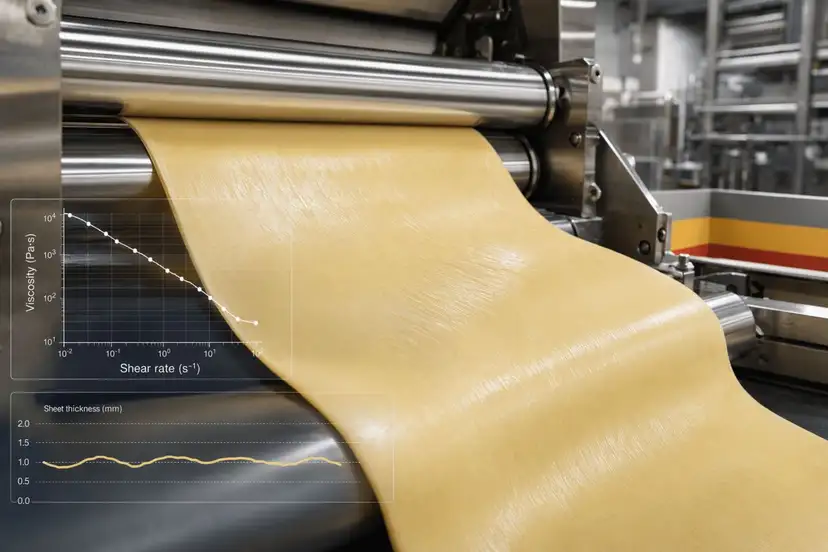
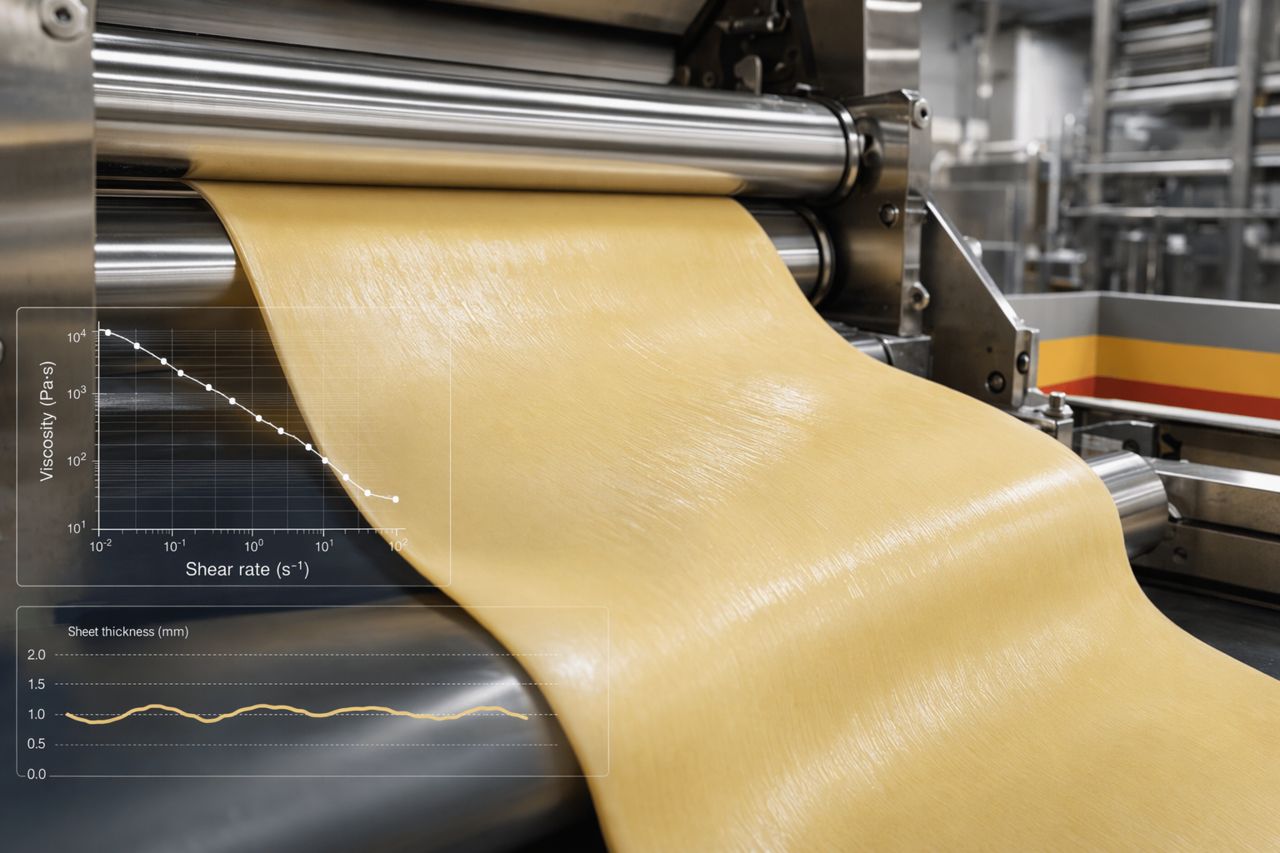
Test 2: dough rheology and sheetability
Sheeting is where many formula changes reveal themselves. The dough must compress smoothly, reduce consistently, and maintain enough strength to avoid tearing while still relaxing enough to avoid excessive shrinkback.
Watch for these signals
- Rough or cracked sheet surface
- Excessive sheet shrinkage after roll reduction
- Edge tearing at high line speed
- Roller pickup or surface smearing
- Uneven thickness across the sheet
- Variation in gloss and density
- Reduced tolerance to rest-time changes
When enzymes are used correctly, the objective is not to make the dough simply softer or stronger. The goal is a controlled processing window: dough that sheets predictably, cuts cleanly, and feeds downstream equipment without frequent correction.
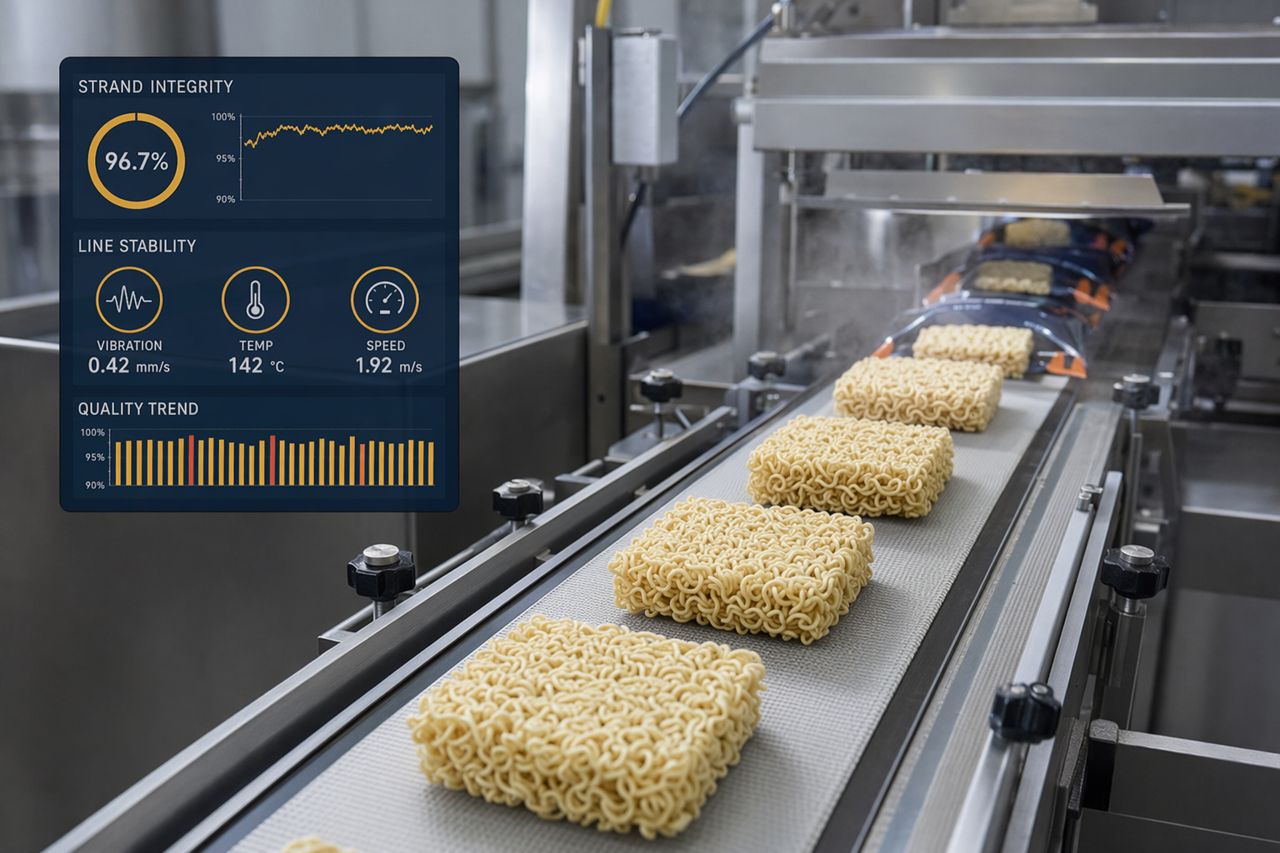
Test 3: strand integrity after cutting
Noodle strands need enough elasticity to survive cutting, conveying, folding, and transfer into steaming trays or molds. Formula changes that look acceptable in sheet form may still create weak strands.
Track strand integrity through:
- Cut definition and strand separation
- Breakage during transfer
- Dusting requirement or surface stickiness
- Strand alignment before steaming
- Resistance to clumping
- Folding behavior for block formation
This matters because strand defects can become packaging defects. Breakage, clumps, or poor folding can reduce finished block appearance and increase quality complaints.
Test 4: steaming or pre-cooking response
During steaming, noodle starch gelatinizes and the protein-starch network sets. Enzyme-related formulation changes can affect how quickly the noodle surface firms, how strands separate, and how the block structure forms.
Useful QA observations include:
- Surface gloss after steaming
- Strand separation and clump tendency
- Core hydration uniformity
- Elastic recovery after steaming
- Stickiness before cutting or folding
- Block shape retention before drying or frying
A strong test plan compares enzyme prototypes under the same steam profile as the control. If the process must be changed to make the prototype work, the business case should account for that complexity.
Test 5: frying or drying behavior
For fried instant noodles, the formula must tolerate rapid water removal and oil interaction. For air-dried or hot-air-dried noodles, the structure must dry evenly without excessive brittleness, surface cracking, or slow rehydration.
Fried noodle QA points
- Block expansion and shape stability
- Surface blister pattern and uniformity
- Oil pickup trend versus control
- Fragility after cooling
- Color development
- Handling strength before packaging
Dried noodle QA points
- Drying uniformity through the block or nest
- Surface cracking or strand brittleness
- Final block strength
- Rehydration behavior
- Color stability
- Breakage during packing and transport simulation
A formula change should not be judged only by fresh texture after cooking. It must also protect factory throughput and finished goods quality.
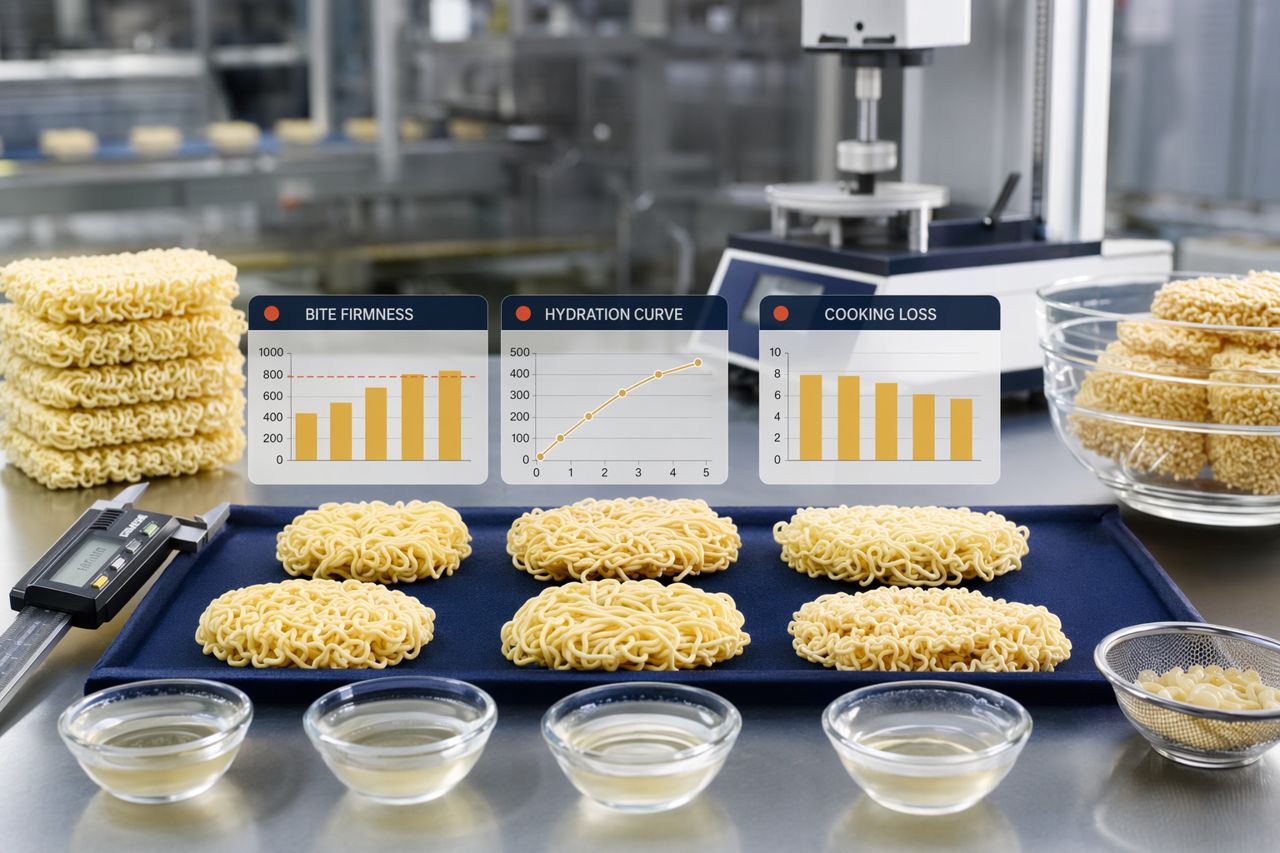
Test 6: rehydration curve
Instant noodles are judged by how quickly and evenly they come back to eating quality. A good QA program tracks more than the final cooked sample. It tracks the path from dry block to ready-to-eat noodle.
R&D teams should evaluate:
- Early water uptake
- Strand separation during preparation
- Core softness development
- Surface firmness versus center hydration
- Resistance to mushiness after holding
- Consistency across different preparation styles
Enzyme systems can help tune this balance, but the target must be specific. A cup noodle, a packet noodle, a premium air-dried noodle, and a bowl-format product may each require a different hydration profile.
Test 7: cooking loss and broth clarity
Cooking loss is one of the clearest indicators of structure. Excess solids in the cooking or preparation water can create cloudy broth, weak bite, sticky surface texture, and inconsistent eating quality.
Track:
- Cloudiness compared with the control
- Surface residue on cooked strands
- Breakdown after holding
- Starchiness in soup base or sauce contact
- Sensory perception of clean bite
The most useful results combine objective measurement with sensory confirmation. A small analytical improvement is only valuable if it supports the target eating experience and consumer format.
Test 8: bite firmness, elasticity, and chew profile
Texture is not one number. R&D managers should separate the specific sensory targets that matter for the product.
Common texture targets
- Initial bite firmness
- Elastic return after compression
- Chewiness through repeated bites
- Surface smoothness
- Core resilience
- Slurp feel
- Resistance to sogginess after holding
Instrumental texture data is useful when it is tied to sensory language. For example, a higher firmness reading may not be desirable if the noodle loses elasticity or becomes rubbery. The right enzyme choice should support the intended bite, not simply push one texture value upward.
Test 9: sensory consistency over shelf life
A formula change may perform well immediately after production but shift during storage. This is especially important for products exposed to distribution heat, long shelf life, or seasoning systems that interact with the noodle surface.
Track shelf-life checkpoints for:
- Bite firmness after storage
- Rancidity or off-note risk in fried products
- Color stability
- Block fragility
- Rehydration speed
- Surface stickiness after preparation
- Sensory match to the approved control
For commercial approval, R&D teams should involve QA, production, purchasing, and sensory stakeholders early. The best formula is the one the organization can reproduce.
Test 10: pilot-to-line translation
Bench testing can identify the direction. Pilot work can refine the window. Full-line validation proves the formula.
Before approving a formula change, confirm:
- Mixing behavior at production batch size
- Dough transfer and rest-time tolerance
- Roll reduction stability at target speed
- Cutting and strand handling performance
- Steam, frying, or drying compatibility
- Packaging breakage and block appearance
- Operator feedback during the run
- Finished product match against the control
This is where enzyme support should be practical. StrandPilot works with noodle manufacturers to translate R&D texture objectives into plant-ready trial plans, including prototype selection, dosage window design, process observations, and final QA interpretation.
A practical QA scorecard for enzyme-enabled formula changes
Use a scorecard that separates product quality from line behavior.
Product quality
- Finished noodle appearance
- Cooked bite firmness
- Elasticity and chew
- Cooking loss and broth clarity
- Rehydration speed
- Hold tolerance after preparation
- Sensory match to target
Line behavior
- Mixing tolerance
- Dough tackiness
- Sheet smoothness
- Roll stability
- Strand breakage
- Steam response
- Drying or frying behavior
- Packaging breakage
Commercial readiness
- Flour variation tolerance
- Process adjustment required
- Operator acceptance
- Repeatability across runs
- Shelf-life performance
- Cost-in-use fit
- Scale-up confidence
How StrandPilot supports noodle R&D teams
StrandPilot supplies enzyme solutions for noodle manufacturing where texture, processing stability, and cooking performance must line up. Our role is to help R&D and QA teams move from trial-and-error to controlled formulation decisions.
We support projects involving:
- Instant fried noodles
- Air-dried instant noodles
- Cup and bowl noodles
- Packet noodles
- Premium wheat noodles
- Reformulation and flour variation management
- Texture optimization and scale-up troubleshooting
Our approach is practical: define the target, map the process risk, select suitable enzyme prototypes, run structured trials, and compare results against the factory control.
Before your next formula change
If your team is preparing a noodle formula adjustment, start with the tests that protect both consumer texture and production flow. The earlier QA is built into the R&D plan, the faster your team can decide whether a prototype is ready for line validation.
Planning an enzyme-supported noodle trial? Request a quote through the on-site form and tell StrandPilot your noodle format, texture target, process type, and current production challenge.